The Extra Chair at Thanksgiving: Making Room for Mom as Family Traditions Change
The Extra Chair at Thanksgiving: Making Room for Mom as Family Traditions Change
November 10, 2026
Thanksgiving has a way of bringing us back to the same familiar places.
The dining room table where Grandma always sat. The kitchen where Mom spent hours preparing turkey, stuffing, and homemade pies. The good china that only came out for special occasions. The children's table where cousins laughed, argued, and occasionally launched dinner rolls at one another.
For many families in the Lehigh Valley, Thanksgiving memories include Pennsylvania Dutch potato filling, homemade cranberry sauce, pumpkin pie, and recipes passed down through generations.
But as parents and grandparents age, the holiday traditions we've cherished for decades may begin to change.
Mom may no longer be able to prepare the Thanksgiving meal. Dad might struggle with the stairs at your home. Grandma, who once knew every family member's favorite dish, may now have difficulty remembering names or following conversations.
These changes can be emotional for everyone.
Yet Thanksgiving doesn't have to look exactly like it did twenty years ago to remain meaningful.
Sometimes, the most important Thanksgiving tradition is simply making sure everyone still has a place at the table.
When Mom Can No Longer Host Thanksgiving
For years, perhaps decades, Mom was the heart of Thanksgiving.
She planned the menu, bought the groceries, prepared the meal, and somehow managed to have everything ready at the same time.
Now, she may struggle to stand for long periods, remember the ingredients, or manage the physical demands of cooking.
For adult children, the natural response is often, "Don't worry, Mom. We'll take care of everything."
While well-intentioned, that response can sometimes leave an aging parent feeling that an important part of their identity has been taken away.
Instead, consider finding ways for Mom to remain involved.
Ask her to help plan the menu. Invite her to share the secret to her famous potato filling. Let her fold napkins, arrange flowers, or explain how Grandma made the perfect pie crust.
Even if she can no longer prepare the entire meal, she can still contribute to the celebration.
The goal isn't to preserve every responsibility.
It's to preserve her sense of purpose and belonging.
Make the Celebration Accessible, Not Exhausting
As parents age, a holiday gathering that once felt effortless may become physically challenging.
A long drive, unfamiliar stairs, crowded rooms, or several hours at the dinner table can be tiring for someone with mobility limitations or declining health.
Before Thanksgiving, consider a few practical adjustments:
- Choose a gathering location with minimal stairs and easy bathroom access.
- Provide a sturdy, comfortable chair with arms to make sitting and standing easier.
- Keep walkways clear of shoes, toys, electrical cords, and other tripping hazards.
- Offer a quiet room where an older family member can rest.
- Consider an earlier meal rather than a late evening celebration.
- Arrange transportation so Mom or Dad doesn't have to worry about driving after dark.
These small accommodations can make the difference between an exhausting experience and a genuinely enjoyable family gathering.
And remember, there's no rule that Thanksgiving must last six hours.
Sometimes a wonderful ninety-minute visit is better than an entire afternoon that leaves everyone overwhelmed.
When Dementia Changes the Holiday
Thanksgiving can present unique challenges for families whose loved ones are living with Alzheimer's disease or another form of dementia.
A crowded house filled with conversations, children, music, and activity may be confusing or overstimulating.
Mom may not recognize a distant relative. Grandpa may ask repeatedly when dinner will be served. Someone might become anxious because the surroundings feel unfamiliar.
Rather than expecting your loved one to adjust to the traditional celebration, consider adjusting the celebration to meet their needs.
Keep routines as familiar as possible. Limit background noise. Introduce relatives naturally rather than asking your loved one to remember their names.
Instead of saying, "Mom, you remember your grandson Michael, don't you?" try, "Mom, Michael is here! He's been looking forward to seeing you."
If your loved one becomes tired or restless, allow them to step away without making it a big event.
Most importantly, avoid measuring the success of Thanksgiving by how much someone remembers.
A person doesn't need to remember every face at the table to experience warmth, companionship, and love.
Let the Grandchildren Be Part of the Tradition
Thanksgiving offers a wonderful opportunity to connect generations.
Encourage grandchildren to spend time with their aging grandparents in simple, natural ways.
They might look through family photographs, help Grandma decorate cookies, listen to Grandpa tell a story, or ask about Thanksgiving celebrations from long ago.
For Lehigh Valley families, that conversation might include memories of shopping at Hess's in downtown Allentown, watching the Thanksgiving Day football game, or gathering in a farmhouse kitchen for a traditional Pennsylvania Dutch meal.
Children can also learn that aging sometimes changes how people communicate or participate.
Explain that Grandma might repeat herself or forget a name, but she still enjoys their company.
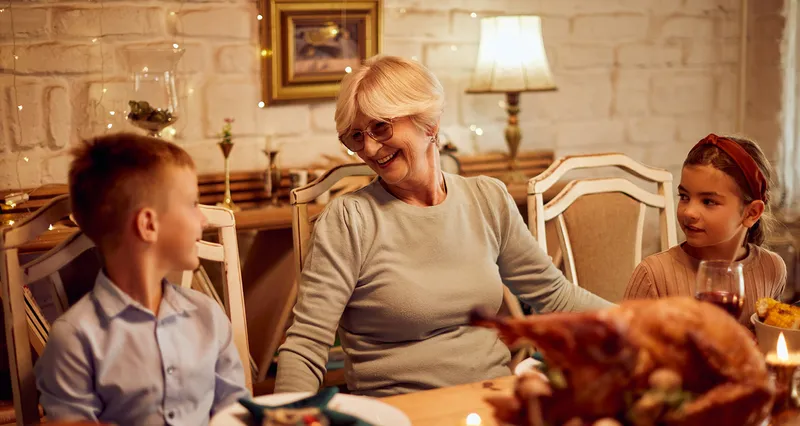
A child sitting beside a grandparent, sharing a piece of pumpkin pie, can create a meaningful moment without any elaborate activity.
When Thanksgiving Happens at a Senior Living Community
For families whose parents have transitioned to senior living, the first Thanksgiving can feel especially emotional.
There may be sadness about the empty chair at the family table or guilt about celebrating somewhere other than Mom's longtime home.
But moving to senior living doesn't mean family traditions must end.
They may simply take a different form.
Families can visit, share a favorite dessert, bring photographs, enjoy a holiday activity, or arrange a smaller celebration around their loved one's needs.
Sometimes, the familiar traditions become even more meaningful when the pressure of hosting, cooking, and managing a household has been removed.
Instead of worrying about preparing dinner or navigating a crowded kitchen, families can focus on what Thanksgiving was always supposed to be about: spending time together.
Gratitude Looks Different as We Age
Thanksgiving often encourages us to reflect on the things for which we're grateful.
As parents grow older, that gratitude may change.
We become thankful for an afternoon when Mom feels especially alert. For the opportunity to hear Dad tell a familiar story one more time. For a shared laugh, a warm embrace, or simply having another holiday together.
We may also find ourselves grieving the way things used to be.
Those feelings can exist together.
It's possible to miss the Thanksgiving celebrations of our childhood while appreciating the moments we have today.
We don't have to pretend that aging is easy or that family traditions never change.
But we can choose to make room for new traditions alongside the old ones.
The Most Important Place at the Table
This Thanksgiving, take a moment to consider what would make the holiday meaningful for the oldest members of your family.
Perhaps it's serving Mom's favorite dish.
Maybe it's bringing the celebration to her instead of expecting her to travel.
Perhaps it's allowing Grandpa to tell the same story he's shared every Thanksgiving for thirty years.
Or maybe it's simply pulling up an extra chair, sitting beside someone you love, and giving them your undivided attention.
At Heather Glen Senior Living in Allentown, we understand that family traditions, familiar routines, and meaningful relationships remain important throughout every stage of life. Whether your loved one lives independently, receives personal care, or is navigating memory loss, we encourage families to find ways to celebrate the holidays together. If you're wondering how to make Thanksgiving more comfortable for an aging parent—or looking for guidance as your family's care needs change—our team welcomes your questions and conversations.
Because Thanksgiving isn't about having everyone gathered around the same table we've always used. It's about making sure the people we love still feel they belong.